

Get Familiar: Kofi Stone
Get Familiar: Kofi Stone
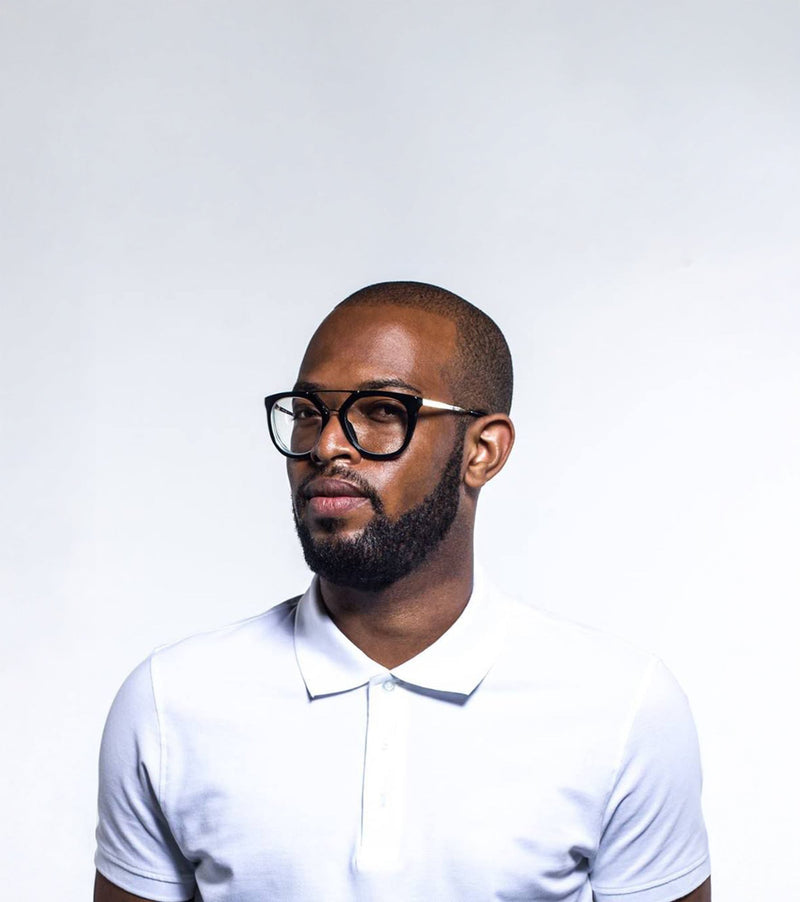
Words by Passion DEEZ Before Kofi Stone was taking his music across Europe, he was recording into a headset on his mum’s old computer and making his little sister listen to the results. Raised between East London and Birmingham, the rapper found his voice through family, faith and artists who showed him there was room in hip-hop to be himself. Those foundations still run through his music today, where personal stories make space for other people to open up too.With ‘The Last Flower to Bloom’, Kofi is taking a moment to appreciate how far he has come. The video for “No Way” brings different versions of himself together to celebrate the journey, rented limo included. But as the crowds grow and the music travels further, he is also figuring out what success means when the goalposts keep moving. We caught up with Kofi to talk Birmingham’s underdog spirit, finding confidence through clothes, collaborations built on friendship and the conversations after his shows that remind him why he does this. Get familiar.For those getting familiar, who is Kofi Stone, and what would you like someone to understand about you before pressing play?Kofi Stone is a man who wears his heart on his sleeve. I make soulful, introspective hip-hop. I’m someone who loves to speak the truth, loves to tell it like it is, and I believe I’m a voice for the voiceless.You grew up between East London and Birmingham. What did each place give you, and where do we hear those parts of your upbringing in your music?The first few years of my life were in East London. I feel like East London has a gritty side to it, and I embodied that. There’s a raw, uncut side to how I approach things, and that’s what I took from East London specifically.Birmingham is similar. It has a very raw edge to it, but I also feel like it’s quite deprived in terms of the arts. When I was growing up, there weren’t a huge amount of opportunities. There was this fighting spirit, this underdog spirit, especially growing up there and almost trying to come back to London to make it.I wouldn’t say I had a chip on my shoulder, but I had a point to prove. There was a hunger that I think you can only understand being a Brummie and being outside the capital. I feel like I embodied that, and it’s in my music.Family was also a big part of my upbringing, and that’s prevalent in my music. I’d say the main themes are love, faith and family. Those have been the most pivotal things in my life.Your dad introduced you to blues, soul and hip-hop, and your mum had her own collection. What do you remember about those early musical moments?I remember a lot about the different sounds, where I was when I heard them and the emotions running through me as a young child. I think it was all building towards me wanting to create my own music.My dad used to play a lot of Nina Simone. We used to take a lot of car journeys from Birmingham to London, and he’d play different music on those journeys. Nina Simone, Nat King Cole, George Benson. He also played a lot of hip-hop: Nas, 50 Cent, G-Unit. Joe, too, on the R&B side. Those are the names I remember from my dad.My mum’s collection was very different. It was more gospel, more R&B and even some pop. I remember Gabrielle. There was loads and loads of music. I was exposed to so much growing up.Your grandfather was a poet. Did you get to read his work, and did it influence your own writing?There are a few poems of his that I’ve read, and that was a big part of why I started writing, actually. I think he inspired me to start.You started recording with a headset on your mum’s old computer. What did that setup look like, and who was hearing those first tracks?I remember that computer. It was my mum’s old computer, and she let me have it. I don’t even know where I got hold of the mic. It was headphones with a telecommunications microphone. I’d plug that in and literally use Sound Recorder on Windows.My little sister was around at the time. I’d make a track, then go and bother her and show her what I’d done. My cousins were around too, so they were aware of me making music when I first started.I was really young, around 11 or 12. I was really keen as a young boy.As you developed your writing, what helped you find your own voice?I think I owe that to a lot of different artists. There was a crop of artists I looked at who were a little bit different in how they presented themselves. I wouldn’t say gangster rap was on its way out, but there was this new crop: your Lupe Fiascos, your Kanye Wests, even Pharrell. They were individuals being themselves in that space.I think I subconsciously took that on board, even in the way I dressed. I understood who I was pretty early. I’d wear Vans and more streetwear stuff. We’re talking mid-2000s, and I’d probably be one of the only ones in my school doing that.The way I dressed helped me find my voice in music. It was almost like, okay, you wear what you want, these are the clothes you like, and this is who you are. You’ve also got to make music that is true to you. What do you want to say?It became one and the same. I feel like that inspired me to live my truth on record.The video for “No Way” brings together a younger version of you, who you are today and an older version of yourself. What sparked that idea?Me and the director were going back and forth with ideas, and I came up with the idea of a younger me and it being a celebration of the journey so far. Those were the foundations, and he took it to another level.Going into this era, I wanted to document this time and celebrate it, so that would be evident looking back. I wanted it to be a coming-of-age thing, seeing how far you’ve come and celebrating the journey.That’s why there’s a limo in there. It’s not something I would normally do. I was struggling with how it would come across at first, if I’m honest. But I felt like, if it was done right, the message would be conveyed.There are little details in there. You can see that it’s a rented limo. It’s almost like you’ve arrived, you’ve got there, but you’re not quite there. You’re celebrating, but you’re still humble. You’re still real. You’re just taking a moment to celebrate. That’s the feeling I wanted in that visual.If those three versions of you could sit down together, what would they make of where you are now?I think the younger me was a little bit more delusional. I think he thought he’d have a mansion at this point, possibly. He used to watch MTV Base and MTV Cribs and think it was easily acquirable.But I definitely think he’d be taken aback by where we are and the things we’re doing: the shows, the amount of support we’ve garnered and all the different little details that are in place now as an artist.Hopefully, the older me has done all that I set out to do. They’d be watching themselves on a journey they’ve already lived. But if it was the older me looking over, I think they’d be proud. They’d say, “This is all that I’d love to be doing,” and it’s been done the right way.What does The Last Flower to Bloom mean to you as a title, and has your understanding of it changed since making the project?To me, it means arriving at your destination, where you set out to go, and everything coming to fruition. In a nutshell, that’s what it means.It hasn’t changed completely, but the goalposts always move. You might achieve a set of things, and that might be what you set out to do. Then you do it, and there’s more you might want to do.What I’ve learned is that there almost is no end to it. Fulfilment is more internal. It’s more of a self-realisation thing than what you can acquire in accolades, or the things the industry or the world deems as success.It’s always changing, and there are different things you might require on your journey to be successful. It’s not just accolades.The project brings together artists including Wiki, Mahalia, Jaz Karis, Children of Zeus, Ady Suleiman and D Double E. How did those collaborations come together?It was nice to work with them because I have a lot of respect for each and every one of them. Some were sessions, and some were sent over.With Wiki, we’d been trying to meet for a while, but we weren’t able to. I’ve loved him for a minute. He’s great, and he shared something that was really dear to him. He really wore his heart on his sleeve on that verse.Mahalia came to the studio. She’s a friend of mine, and we had a great conversation. It was very natural, just like two friends hanging out, and it came together. It almost felt like we weren’t working.Ady was very similar because that’s my bro. We were having a conversation about music and not knowing where to go. He was saying he wanted to do some cool stuff, and I think he felt a bit low that day. I said, “You know what? Let’s just make some music.”In that moment, I made the verses for “Baby Love”. We got into the studio the next day, he wrote his chorus, and that was that. They all came from real moments, which was beautiful.D Double E was unexpected. It was more like, we’ll reach out; he’s a legend, we’d love for it to happen. We didn’t expect too much. Loved him if he did, loved him if he didn’t. Then he hit us back and said, “Yeah, I love it.” He gave us his verse, and it was amazing.There’s also Children of Zeus on there. We did two versions of the song. Jaz Karis was quite recent. I’ve loved her for a minute, and she did great. Everyone did amazing, man. I’m really grateful to have them all on there.Soul runs through your music, alongside hip-hop and jazz. What do you listen for in production, and how do you know when you can tell a story on it?There’s always something that evokes an emotion, that triggers a certain time or a moment in life that’s happened, or helps me find the emotion I’m feeling. I feel like I’m a book of different emotions. That’s one way to describe it.Music has the power to evoke those different emotions. When I hear a certain sound, it helps me tap into that. It might be happy or sad. Depending on how I’m feeling at that particular moment, it can really connect.When I’m feeling a certain way, I look for a certain type of production and hope I can get my thoughts and feelings out. It’s something I can’t really describe, but it’s very much about the musicality. If I’m feeling sad, there’s a certain kind of musicality I look for. If I’m feeling happy or super gassed, there’s a sort of melody I look for. It depends on how I’m feeling.What place does faith have in your life, and how does it enter your writing?Faith is a big part of my music. I wanted to cover it most on my last project, A Man After God’s Own Heart. I try to have it as a running theme because it’s part of me. It’s my upbringing, it’s something I practise, and it’s almost like my cornerstone. Christ being my cornerstone, it’s somewhere I can go when I’m lost, when I don’t know where to go or when I need help.I can draw inspiration from my faith. There’s a lot of knowledge in the Bible, in different parables and things like that. It’s a running theme, and something I feel almost obliged to give my take on as a man of faith in the music industry.I try to be as truthful to myself as I can in the music. If I excluded that, I’d be short-changing people and not being a man of my word. I think it’s important to live your truth, so it’s something I make an effort to have in the music.Your music makes space for vulnerability. Growing up, who gave you the room to be open about how you felt?That’s a really good question. I’ve never thought about who directly gave me that. Growing up, my mum gave me a lot of space to be me, to voice my opinions and my feelings. I think that would have subconsciously had an effect on me and helped me become the man I am today.I grew up in the house with my mum and my sister, so it was a house of women. I think that had an effect on me as a man, learning about that side of things, the softer side. I might have embodied that in some way.Not all the time, but I feel women can be better at being vulnerable, while society says men shouldn’t be. I put that into my music and saw it as a superpower, essentially. There’s strength in vulnerability. I’d say my mum allowed me to be that.There’s also a sense of care in your music: giving people space to be vulnerable and helping them through it. Does that continue in your relationship with listeners?I try to provide that in my music and in person as well. I try to open my doors to individuals. At every show, I speak to every individual who’s there who wants to speak.I’ve had conversations with young men, and some of the stories I’ve heard have been very deep. Some people need comfort. On some of the tours I’ve done, it’s been made evident what my role is as a rapper in this game.Because I’ve opened the floodgates for vulnerability, there are individuals seeking to be nurtured. It puts things into perspective for me. It realigns my purpose and reminds me of my purpose.Your music has taken you across the UK and Europe, with Australia and New Zealand still to come. What has surprised you most about the people and places you’re connecting with?This last tour was a bit surreal. Being a kid from Birmingham, it’s mind-blowing to be able to do pretty busy shows in places like Hamburg and Cologne. Just people turning up, if I’m being honest, is mind-blowing. Every time, I’m taken aback.I think it’s because of the way we’ve built Kofi Stone through an independent route, self-funded. There’s only so much you can do without a machine. The fact that it’s resonating with people in these places, without being forced upon them, is something I first of all owe to God. I can’t say it’s me.I’m always taken aback by it. It’s like, how is this happening? I’m just very grateful.From those first recordings on his mum’s computer to conversations with listeners after shows across Europe, Kofi Stone has kept the people around him close to the music. Family, faith and the freedom to say how he feels continue to guide him, even as his idea of success changes. Spend some time with The Last Flower to Bloom and get familiar with an artist who puts that honesty into every part of the journey.