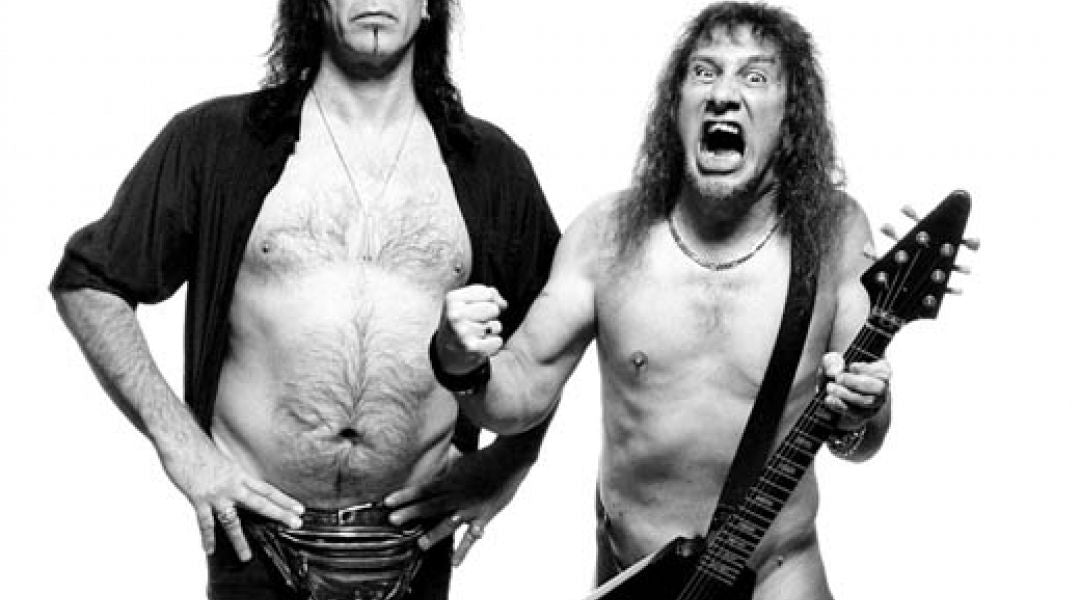
Anvil! The Story of Anvil is a 2008 Canadian documentrary film about the Canadian heavy metal band Anvil. The film is directed by screenwriter Sacha Gervais, in his directorial debut, and features interviews with other musicians who have been influenced by the band, including Slash, Lemmy, Scott Ian and Lars Ulrich.
Related Articles
Charlie Dark - The Listening Room
Charlie Dark - The Listening Room
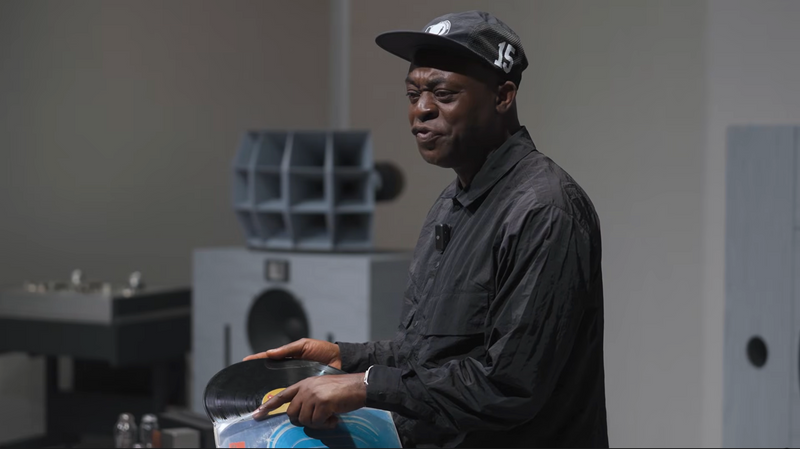
Some of the most important musical education happens outside the classroom, whether through pirate radio frequencies, record shops or the dancefloor of a club you probably weren't old enough to be in.In the latest Listening Room session, DJ and resident host Charlie Dark takes us back to late 1980s London, a time when jazz dance culture was thriving and the worlds of jazz and hip-hop were becoming increasingly intertwined. From discovering music through pirate radio to sneaking into the legendary Dingwalls on a Sunday, Charlie reflects on the records, spaces and communities that shaped his musical identity and ultimately changed his life.Sharing selections from Art Blakey, Ramsey Lewis, Willis Jackson and more, Charlie explores the musical connections between generations, tracing how jazz influenced hip-hop and how London's underground scenes brought different sounds and communities together.Get familiar with Charlie Dark as he takes us through the records, stories and dancefloors that helped shape London's musical landscape.
Music
Rich Medina on R.O.A.D Podcast
Rich Medina on R.O.A.D Podcast
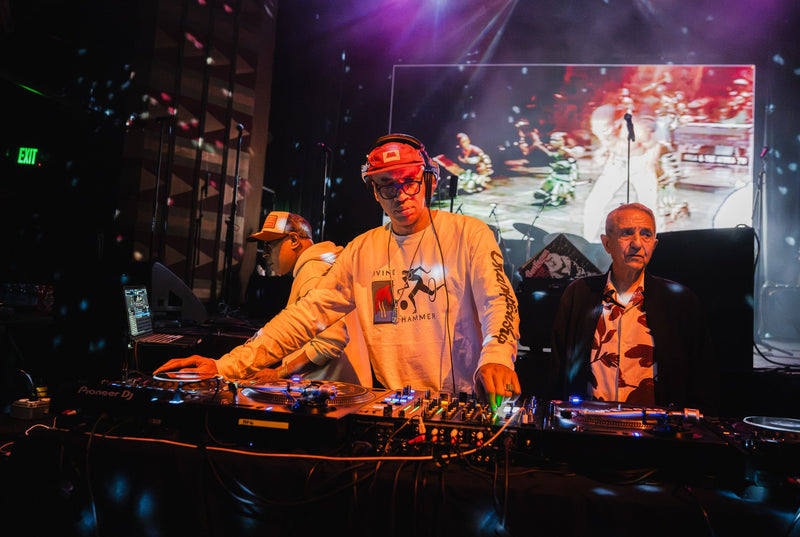
Photography: Farah SosaFrom the dancefloors of New York to the listening rooms of Miami, few figures have helped shape contemporary DJ culture quite like Rich Medina. With decades of experience behind the decks, the legendary DJ, producer and creative director of Dante's HiFi has built a career around musical discovery, community and an unwavering commitment to the craft.In the latest episode of the R.O.A.D. Podcast, Rich Medina joins the crew for the first of a two-part conversation exploring his journey from DJ to venue owner, the importance of building meaningful connections within local communities and the role of music in creating spaces that go beyond the dancefloor.Reflecting on his experiences at legendary New York institutions like APT, Rich traces the foundations of modern club culture, from introducing the revolutionary sounds of Fela Kuti to American dancefloors to the origins of The Originals crew and their high-energy DJ sessions. The conversation also explores the differences between vinyl and digital, the warmth of analogue sound and what it takes to translate a lifetime of musical knowledge into a physical space like Dante's HiFi.Beyond the records, Rich shares his philosophy on staying true to your own lane, navigating an industry increasingly driven by social media and understanding the responsibility that comes with shaping culture rather than simply participating in it.Get familiar with Rich Medina as he reflects on the records, people and spaces that have defined his journey and the importance of keeping music and community at the centre of it all.
Music
Get Familiar: EYCEE
Get Familiar: EYCEE
Interview by Passion DEEZ | Photography by Lily ArwenFor the past decade, EYCEE has quietly become one of the most important connectors in Dutch nightlife. Through PARDON, the platform he founded, he helped introduce sounds, artists and scenes that sat outside the traditional boundaries of Amsterdam club culture, creating space for UK bass, club mutations, emerging talent and cross-border collaborations long before many of those sounds became fixtures on Dutch lineups. This year PARDON celebrates its tenth anniversary with international editions, a growing label catalogue and a reputation for championing artists before the rest of the industry catches up. At the same time, EYCEE's own musical output continues to evolve. Recent releases such as make ‘em dance, Never Enough and Cuevas MAW DUB showcase an artist increasingly comfortable moving between genres while refusing to be boxed into a single sound. As the year draws to a close, after a busy summer of Festivals, club shows and international appearances, we caught up with EYCEE to reflect on ten years of PARDON, the realities of sustaining an independent platform, his relationship with UK music culture, and why creative curiosity remains his greatest asset. PARDON is celebrating its tenth anniversary this year. Looking back, where does the platform stand today?Reaching ten years feels significant because it's never been easy. After COVID we had a really strong run of events where we rebuilt momentum and continued growing the platform. We'd already been talking for years about expanding outside the Netherlands, and the ten-year anniversary felt like the right moment to start doing that properly. The series of international events are happening very organically. We work with promoters and collectives we genuinely respect, and if it feels like there's a natural connection, we'll explore ways to collaborate.Personally, getting to this point means a lot. There were plenty of moments where I doubted things or had to push through difficult periods. That's part of any long-term project. To still be here ten years later feels rewarding, both for me personally and for everyone who's contributed to PARDON over the years.When you look at contemporary dance music lineups, can you see PARDON’s influence?I don't want to take credit for everything, because there are a lot of great people doing good work. But I do think we played a role in introducing certain UK sounds and artists to Dutch audiences, especially in the years after COVID. We've always tried to lead with what we genuinely believe in. If we think an artist deserves a platform, or a sound deserves more attention, we'll try to create space for it.Over the years, I've had local promoters tell me they were inspired by what we were doing and that they wanted to build something similar in their own city. That's probably one of the most rewarding parts of it because it means the impact extends beyond our own events.Has that mission changed over the years?Not really. The specific sounds might change, but the mindset remains the same. We're still interested in finding things that feel fresh and exciting, things that deserve more visibility, and helping create opportunities around them. That's always been the DNA of PARDON.You've worn many hats over the years: DJ, producer, label head, promoter and curator. What takes up most of your time these days?Honestly, there isn't really a typical day. One day I'll spend the morning dealing with logistics for an event, the afternoon organising travel or schedules, and then the evening working on music. I generally separate the administrative side from the creative side. During the day, I'm handling emails, invoices, planning and everything else that comes with running projects. Then in the evening, I switch into studio mode. I actually enjoy working on music at night, because fewer people are trying to reach me. I can focus properly.Amsterdam nightlife has changed dramatically over the past decade. What do you think is better now?I think there are far more opportunities for younger artists. Ten years ago, if you played sounds that didn't fit neatly into established genres, there weren't many platforms available. That's one of the reasons we started PARDON in the first place. Today, there are more bars, smaller venues and experimental spaces where younger DJs can develop, take risks and learn. The barriers to entry are lower than they used to be, and that's a positive thing.Since our last conversation, you've released music on United Identities, expanded the PARDON label and continued developing more of your own productions. Let's start with Queen Bee 2.0. How did that record come together?It's actually quite a funny story. Seb Wes originally sent me the track while I was on holiday in Cyprus. I really liked it, but I felt there were a few things I would have approached differently. So I asked him if I could remix it. He sent me the stems and I started working on it. Then my laptop got stolen, which meant we had to rebuild everything from scratch. By the time we finished reconstructing the record, it had naturally evolved into something new. That's why it became Queen Bee 2.0 rather than simply a remix. It ended up becoming a collaboration and a more developed version of the original idea.Another standout release is make ‘em dance. How did that track emerge?I have an enormous folder of unfinished music. The challenge isn't making tracks, it's deciding which ones deserve to be released. I move between genres constantly. One week I might be making House music, the next week UK-funky, then something bass-heavy or even techno. I enjoy the freedom that comes with that, but it also means I end up sitting on a lot of music. A friend came by the studio and I started playing him various demos. make ‘em dance immediately stood out to him. That conversation helped me realise it should be the next release. It's definitely one of my more energetic records. It feels designed for larger rooms and bigger festival moments.Speaking of festivals, you've already played some major events this year. How has the season been treating you?I'm incredibly grateful. Getting booked for the festivals you've dreamed about playing always feels special. What I enjoy the most is being trusted to play different kinds of slots. One weekend I might be on a house-oriented lineup, the next I might be playing something much more bass-driven or eclectic. For a long time, people have always told me it would be smarter to focus on one sound because it would make my identity clearer. I ignored that advice. Now I feel like that decision is paying off, because promoters trust me to move between different environments while still being myself.Another recent release is Never Enough with DANN. That track started life in London.Yeah, that one came together very naturally. I was in London for a few days, mostly to recharge creatively. I went record shopping, visited Fabric, saw Carista play and generally immersed myself in the city. At the same time, Dann was in town for a writing camp. We met up at Red Bull Culture Clash, had a couple of drinks, went straight to the studio afterwards and started working. Sometimes the best ideas happen when you're outside your normal environment. You're inspired, your ears are fresh and everything feels a bit more open. That's exactly how Never Enough came together. Special shout to Who’s Susan.London seems to be a recurring source of inspiration for you.Definitely. My connection to UK music actually goes back much further than I realised at the time. Growing up, I was already drawn to artists like Gorillaz and records like Freestyler, long before I understood where those sounds came from. Cyprus also has strong historical ties to Britain, so English culture was always present in certain ways. As I got older, that interest naturally expanded into UK garage, dubstep, grime, bass music and everything surrounding those scenes. A huge percentage of the artists I admire and the music I collect still comes from the UK.You've also spent time in Manchester recently. How does it compare to London creatively?Manchester feels different. London is incredible, but there's also a lot of pressure and competition. Manchester feels a bit more collaborative or tight-knit in that sense. It reminds me a little bit of the relationship between Rotterdam and Amsterdam. There's less focus on status and more focus on supporting each other and building things together. I really enjoyed the atmosphere and had a great time over there. Looking ahead, what excites you most about the future?I'm thinking a lot about legacy recently. That sounds dramatic, but I think when you've spent ten years building something, you naturally start asking what comes next. I'm increasingly interested in creating things that go beyond club nights. I want to think about how we can bring people together, share knowledge, create opportunities and help inspire younger generations.And musically?The hard drives are full. I've got a huge archive of music waiting to be finished, refined or released. Right now, the challenge is figuring out the best way to share these tracks with the world. There's a lot more coming, trust! For EYCEE, ten years of PARDON isn't a finish line but proof that independent ideas can have lasting impact when they're guided by conviction rather than trends. Whether introducing overlooked artists, building bridges between scenes or continuing to push his own productions into new territory, his approach remains rooted in curiosity above all else. As PARDON enters its second decade and his catalogue continues to grow, it's clear that neither the platform nor its founder are interested in standing still. If the first ten years were about creating space for new sounds, the next chapter looks set to focus on building an even broader legacy—one that extends beyond the dancefloor and into the communities that keep it moving. Watch EYCEE b2b Chale at Patta x Keep Hush now.
Get Familiar
Kinderdag Festival 2026
Kinderdag Festival 2026
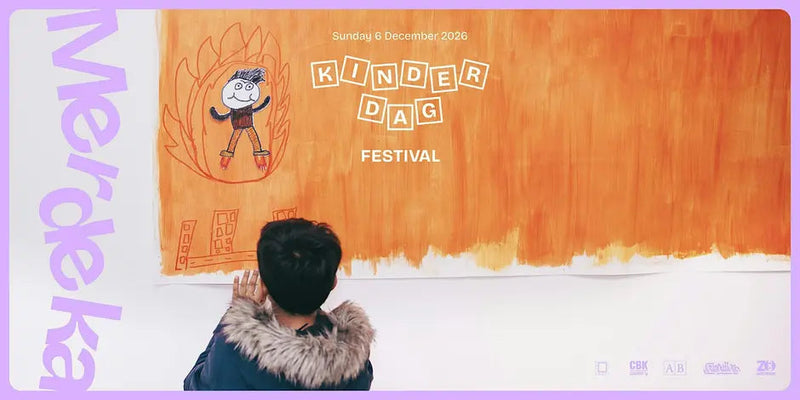
Kinderdag Festival returns to Amsterdam Zuidoost on Sunday, December 6, bringing children aged 2 to 12 and their families together for a day of art, music, dance and discovery. An inclusive alternative to traditional December festivities, the annual festival creates space for every child to feel seen, welcomed and celebrated.This year’s theme, Merdeka! (Freedom), opens up conversations around Indonesian independence, family histories, colonial history and memory. Giving particular space to Indonesian and Indo-Dutch perspectives, the programme explores these subjects through activities designed for different ages, with creativity and fun at the centre.The day begins at OSCAM, where families can collect their stamp cards and programme information before exploring activities across the neighbourhood:B/A/M/ — Bijlmerplein 875: Creative workshops led by the Children’s Museum Directors and a collective closing celebration.Foundation — Bijlmerplein 99–100: Indonesian dance workshops and Staat Sterk, an interactive theatre performance.CBK Zuidoost — Anton de Komplein 120: Two creative art workshops led by artist Snars.ZOJazz Lounge — Bijlmerplein 888: Jam sessions where children can make music together.Athenaeum Boekhandel — Bijlmerplein 1009: Storytelling sessions for the youngest visitors.One ticket per child gives access to the entire festival. Children collect a stamp for every activity they join, before bringing everyone back together for a closing party with families and makers. Collect the final stamp at the celebration and receive a special goodie bag.Tickets are donation-based, so families choose how much they would like to contribute. Every donation helps keep Kinderdag Festival accessible to all children. Please note that only one ticket per child can be purchased at a time.If you prefer your child not to be photographed or filmed, add a ‘Do Not Film Me’ button to your ticket order. You’ll receive a red button on arrival for your child to wear throughout the day.Sunday, December 6, 202612:00–17:00Start at OSCAM, Bijlmerplein 97, 1102 DA Amsterdam ZuidoostBring the family, explore the neighbourhood and celebrate together.
Events
YOUNGSTERS - Patta Running Team
YOUNGSTERS - Patta Running Team
Winter sessions on a dark track, a hybrid race that pushed everyone to the edge, a training camp where a group had to become a team, and a race day nobody ran alone. YOUNGSTERS follows the fifth edition of the Patta Running Team Youngsters programme, from the first kick-off to the finish line on 16 May 2026. "The input is 100 percent, but the crew love is 300 percent." A Patta Running Team film. Powered by Samsung Galaxy.
Film & Documentaries
Patta Running
PAX the humanoid at NAR
PAX the humanoid at NAR
From the Kyteman Orchestra to his old-school band ILLICIT and appearances at festivals including Roffest and OFF THE TRACKS, PAX has spent years carving out his own space within the Dutch music scene. As PAX the humanoid, he continues to explore his individual sound, bringing together years of musical experience and creative experimentation.On November 20, PAX the humanoid takes over NAR to celebrate the release of his second album. More than just an album launch, the evening brings together music and visual art, featuring a special vinyl release, an exhibition showcasing artwork by Job Kind and a live performance led by Niels Broos.Bringing together the different creative worlds that have shaped his journey, the event offers a chance to experience the new project beyond the record itself. Join the celebration at NAR on November 20; tickets available now.
Events
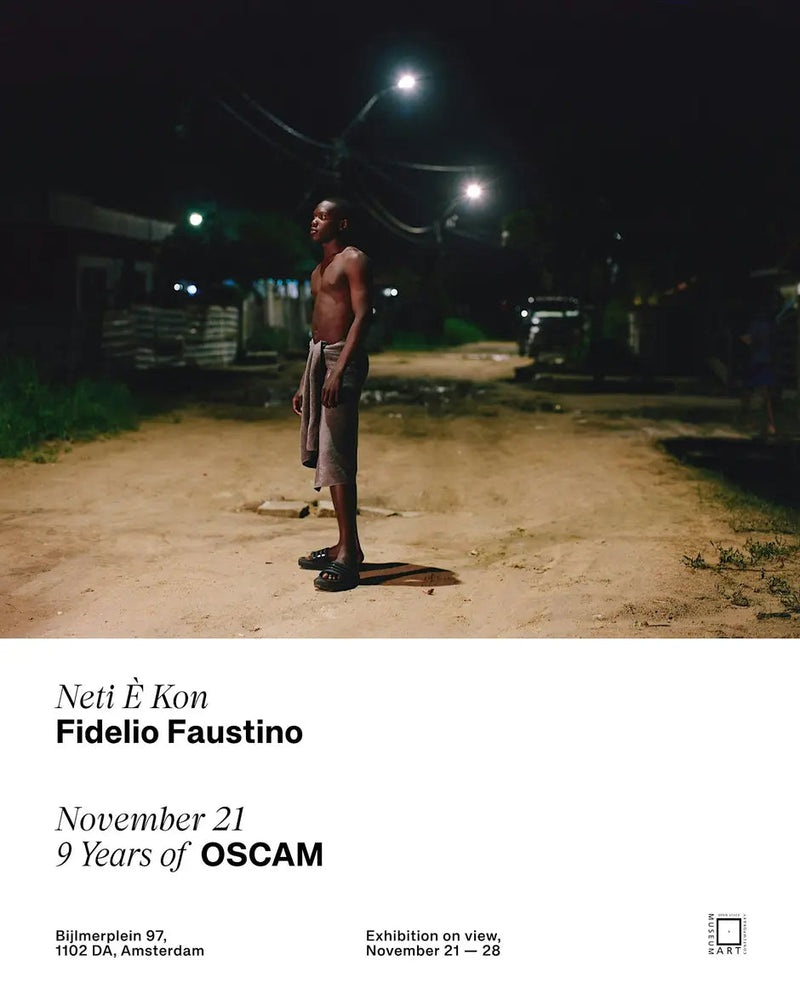
Neti È Kon by Fidelio Faustino
Neti È Kon by Fidelio Faustino
Rooted in Amsterdam Zuidoost and connected to makers and creatives across borders, OSCAM has spent nine years making space for diverse stories, new perspectives and talent. Ahead of its official anniversary on November 25, OSCAM brings the community together on Saturday, November 21 to celebrate with music, good company and a special pop-up exhibition. For the occasion, photographer and director Fidelio Faustino presents Neti È Kon, which translates from Sranantongo as ‘The Night Is Coming’. Drawing on memory, spirituality and fantasy, Faustino explores the possibilities of Black and Indigenous imagery, examining nostalgia and belonging as feelings we create and shape through our experiences. The exhibition captures the spirit of the night in Suriname and the hours that remind Faustino of home. Through his images, he invites visitors to reflect on their own understanding of home, the memories attached to it and the ways we build a sense of belonging. Come through on Saturday, November 21st to celebrate nine years of OSCAM and get familiar with the work of Fidelio Faustino.
Events
Get Familiar: LUWA
Get Familiar: LUWA
Interview by Passion DEEZ For Luwa.mp4, being alternative has never simply been about how something looks. It is a way of thinking: questioning convention, building worlds from scratch and finding new ways to communicate a Nigerian identity without reducing it to something immediately recognisable.Born and raised in Ibadan before spending formative years in the UK, Luwa’s relationship with music began in high school but became all-consuming during his gap year in 2019. What started with hyperpop experiments has since expanded into something harder to categorise, pulling from punk, electronic music, video games, Nigerian sounds and the visual language of science fiction.Now back in Nigeria, Luwa is refining a universe of his own. He calls the wider aesthetic petrol punk: something raw, futuristic and unmistakably rooted in where he comes from without needing to announce itself as “African” at every turn.Ahead of his appearance at WAF Skatepark for adidas Originals x Sp5der hosted by Patta Lagos, we caught up with Luwa.mp4 to talk about growing up outside Lagos, rebellion, Nigeria’s new underground, world-building, the meaning of being alternative and his latest project, Young Riot.For anyone getting familiar with you right now, what do we need to understand about where you come from and the artist you’ve become?Music really started for me back in high school, but when it became my whole life was during my gap year in 2019. I had just come back to Nigeria because I spent the later part of high school in England and did my A-levels there. I tried a lot of other things. I was a science student and at one point I thought I wanted to go into investment banking, but music was always the thing I kept coming back to.Right before COVID, I started writing a lot of songs. Then COVID hit and I realised music was what I could actually see myself doing for the long run. I went back to England later in 2020, but I got to a point where I was like, I don’t think I can do school because music is genuinely all I can think about.I moved back to Nigeria in 2023, and I think that was really necessary. When I first started making music, I was making a lot of hyperpop, but moving back helped me think about what I actually represent. I’m very Nigerian. I grew up here my whole life. I didn’t even grow up in Lagos, I grew up in Ibadan. Nigeria is in my blood, so I had to ask myself: what does that look and feel like when I give that part of myself to the world? I’ve always approached music from quite an alternative and punk mindset, but every year I feel like I’ve grown deeper into this punk identity.You grew up somewhere fairly traditional but became an artist whose identity is built around challenging convention. Where does that rebellious instinct come from?My parents are more liberal than the typical Nigerian parents, but one thing they always encouraged us to do was think differently. That was almost the status quo between me and my siblings.Growing up in Ibadan and then going to boarding school in Lagos, I always felt like an outsider. There might have been one other person from where I was from, while everybody else could relate to the same things and the same kind of upbringing. I think that made me understand early that maybe I just see things differently.Even when I’m inspired by other people, one thing I always ask myself is, “How can I do this in my own way? What does my version actually look like?”There were also things aesthetically and artistically that I was naturally drawn towards that challenged the norm, even inside my own household. I think that actually prepared me for criticism. If I can challenge things inside my own house and stand on what I believe, then I’m ready for whatever anybody outside has to say. What was it like growing up in Ibadan while looking towards Lagos as this bigger world?Ibadan is very traditional. It’s a very big place, but it doesn’t have that same feeling as Lagos. When you’re looking at Lagos from Ibadan, you see this huge city, but because you’re slightly removed from it, you can also see Lagos differently. When you’re born directly into Lagos, sometimes everything feels so big that it becomes difficult to look outside of it. Coming from Ibadan, I could see opportunities or perspectives that maybe people inside Lagos weren’t necessarily paying attention to.Then moving to London gave me that same perspective on Nigeria in general. When I came to London, I saw how expressive the people around me could be compared to Nigeria. London can still be a conservative place, but it opened my eyes to another way people could express themselves. In a way, I started seeing London as another Lagos: another big city, another set of challenges, another place where there are things people aren’t necessarily paying attention to.There has been a lot of conversation around Nigeria’s current underground in relation to the earlier alté movement. What has your generation inherited from that era, and what is different now?One major difference is the idea of micro-communities within the underground. Alté was a very broad movement that really sparked change. What is happening now feels more like people taking that ideology — the idea that the next generation wants to do things differently — and defining smaller pieces within it.You’re seeing more concise niches forming. There might be punk, there might be metal, there might be something completely different beside that there might be something completely different beside that. It isn’t necessarily about dividing the underground. It’s more about allowing different communities to define themselves properly. I think one thing we are doubling down on now is community and really defining what that means.Individually, something I’ve taken from the generations before me is world-building. That is something I’m very interested in. Some people think you need to become huge before you start thinking about building a world around yourself, but I don’t believe that. You can start doing that from the very beginning.You’ve previously described your sound as cyberphunk, but you’re now talking about something called “petrol punk.” What does that mean?With cyberphunk, the “funk” came from the idea that there is a bounce to everything I’m doing. There is obviously funk music, and there’s Brazilian funk, but for me it was more about that feeling of movement.The cyber part comes from the sounds I use. A lot of them literally come from video games, computers and digital systems. Those things are always in my mind when I’m working on music. But now I’m defining the wider aesthetic as something called petrol punk. I’ve always been inspired by things like steampunk, cyberpunk and solarpunk, and I started thinking: when we’re talking about Africa, why does it always have to be called “African punk”?Why can’t it be something that feels African without necessarily having Africa in the name? I thought about petrol because, especially in Nigeria, petrol is one of our major exports. It is something raw, and that rawness made sense to me. That’s how I’m beginning to think about the whole aesthetic.A lot of artists get labelled “alternative” because of how they dress or because their music doesn’t fit neatly into Afrobeats. What does being genuinely alternative mean to you?Those things can be factors, but I think being alternative is really about the way you present the art. For me, it means looking at the way something is usually done and asking: “Why does it have to be done like that? What is another way?”It doesn’t mean looking down on people who do things differently. It’s just about deciding what particular niche you are speaking to and thinking outside the box about how you want to present yourself to them. It’s really about context.Across your recent releases, what do you hear changing most in your own music?My songwriting has become simpler, but the emotion in the delivery has become stronger. My subject matter has also diversified. I think I’ve understood that sometimes less really is more.What changed when you started thinking about making an album rather than singles or EPs?When I made my debut album, I started from the idea that all the smaller worlds I had built before were almost like pilots. I wanted to make the actual film. In my head, I had to really commit to a character. It involved a lot of travelling and collaboration, and it helped me understand that I genuinely need other perspectives.A lot of what I had done before was mostly on my own. I’m still spearheading the direction, but an album is different. This can become the soundtrack to someone’s life. Some people only listen to albums.I had to think much more about cohesiveness, how different songs and different moods could still feel like they belonged in the same world while maintaining my artistic integrity.I also wanted to see what I was capable of doing without committing to a deal or having some huge system behind me. I wanted to know what I could create with my own ideas and the people around me. And the collaboration wasn’t only with musicians. It was with brand owners, visual artists, creative directors — people who could look at the world I was building and tell me what it meant to them.Why was it important to actually call it an album?People sometimes talk about albums as if you need to reach a certain level financially or commercially before you’re allowed to make one. But to me, being ready to make an album is about being ready to lock yourself into a specific character and a specific mode.I got tired of putting so much passion into the world-building around projects and then still saying, “It’s just a mixtape,” or, “It’s just an EP.” I was like, you know what? Let me call it an album. I don’t need to wait until I reach some quote-unquote big place before I can put that level of intention behind something.Nigerian music is now one of the most globally visible scenes in the world. Do you ever feel pressure to make your Nigerian identity immediately recognisable to international listeners?I wouldn’t call it pressure. I see it as a challenge, but it can also be much more rewarding. There are so many ways of expressing Nigerian identity that haven’t been explored yet. Somebody could hear something I make and immediately know it is Nigerian, but at the same time think, “I never knew Nigerian identity could be processed in this way.” That’s exciting to me. The main thing is not forcing it. I don’t want to make something just because I need everybody to know I’m Nigerian. It should already be in your body. It should naturally be part of what you make.Your music feels like it could exist inside a film or a video game. If there were no limitations on budget, what would the full Luwa.mp4 universe look like?Right now, I think Luwa.mp4 is a punk star, but almost like an actor who keeps playing different niche roles. If you look back at my older work, there was a whole werewolf era. Then I had this character that was like a punk footballer. Now I’m in this lizard kind of world. I almost think about it like Ben 10. There are all these different aliens, but they still come from the same person. Luwa.mp4 is this punk star who is known for playing these very specific roles.I grew up as a Disney and Nickelodeon kid, so character and acting have always fascinated me. People sometimes talk about actors needing to be a blank canvas so they can disappear into a character. I’m interested in doing the opposite. I can still look exactly like myself, but each role feels like a completely different section of the same theme park. Right now, I’m thinking about how the lizard world connects into something more vampiric. It’s mystical, but cyber at the same time.Outside of music, what are you consuming right now that is feeding the next version of yourself?I’ve been watching Devilman Crybaby. I also recently discovered Entourage, and I’ve really been resonating with the characters. With games, I’m trying to go back and play older things like Infamous and Prototype. I loved those games when I was younger, and I can still see a lot of that inspiration bleeding into the characters I’m creating now.Musically, I listen to everybody, but I find myself going back to older Nigerian music. A lot of that music feels very free. It doesn’t sound formulaic. It sounds like people were just saying, “You know what, bro? Let’s try anything. Let’s catch the rhythm.” I really connect to that freedom.Do you think success changes the meaning of rebellion? At what point does the underground risk becoming part of the system it was originally pushing against?Definitely. The more successful you become, what you’re rebelling against also changes. There can still be a core set of values, but your relationship with rebellion is going to evolve. I think the underground becomes part of the system when you can no longer feel the passion in what people are doing. That might sound vague or cliché, but the underground is synonymous with rawness.When people stop being able to feel that rawness in the approach — not just aesthetically, but in the intention behind the work — that’s when you can tell something is being consumed by the mainstream.Your new project Young Riot is out now. What does this chapter represent?Young Riot has one of my most basic covers. It is literally just a photograph of me when I was really young, holding up two peace signs that almost look like Ys. There’s this phrase I’ve been playing with, “Yuri Yori,” which comes from Young Riots. It sounds African to me. It has this cultural feeling even before you necessarily understand what it means.My previous project, PS Specimen, was basically my own experiment with mainstream music. Things were going well for me, so I started asking myself: what would it mean for me to try to make mainstream music?And what I realised is that somebody like me can’t really make “mainstream music,” because what does that even mean when expression always comes first?What I did learn from that era was the art of less is more. So Young Riots is the beginning of everything I learned from Specimen.At the core of everything, I’m still just a young riot. My natural instinct is always going to be experimental, but I think I now understand what it means to be on a path towards being more authentic than I’ve ever been.It is also a reconnection with my inner child. I look at that younger version of myself and think: this is the life that kid would have prayed for. He would look at me now and say, “Wow, I can’t believe this is me.” That’s what the project really represents.From Ibadan to Lagos and London and back again, Luwa.mp4’s story is less about escaping where he comes from than learning how to reinterpret it. His music exists somewhere between punk instinct, digital experimentation and a distinctly Nigerian sense of place, with each release opening another door into the larger world he is constructing. With Young Riot, that world comes back to something simpler: the kid at the centre of it all, still curious, still rebellious and still asking why things have to be done the way they have always been done. Get familiar with Luwa.mp4 and stream Young Riot now.
Inside the Studio with Prince Fatty
Inside the Studio with Prince Fatty
From UK dance music and LA hip-hop to the sounds of Jamaica and Latin America, producer and engineer Michael Pelanconi, better known as Prince Fatty, has spent decades connecting musical worlds. With a studio résumé that includes J Dilla, Manu Chao and Graham Coxon, his approach is rooted in an appreciation for sound, rhythm and the art of production.Best known for his distinctive take on reggae and dub, Prince Fatty brings his signature sound to The Vision's 2019 house classic Heaven, featuring Andreya Triana. Released as part of Defected Records' House of Roots EP, curated by legendary broadcaster David Rodigan, the rework trades the original disco-driven rhythm for a stripped-back, one-drop reggae groove, giving the track an entirely new character while preserving its soulful foundations.Stepping inside his London studio, Prince Fatty breaks down the creative process behind the remix, his approach to mixing and the philosophy that has shaped his work across genres and generations.Get familiar with Prince Fatty and the art of making music that stands the test of time.
Music
AGLXY LOOP - Edson Sabajo interview
AGLXY LOOP - Edson Sabajo interview
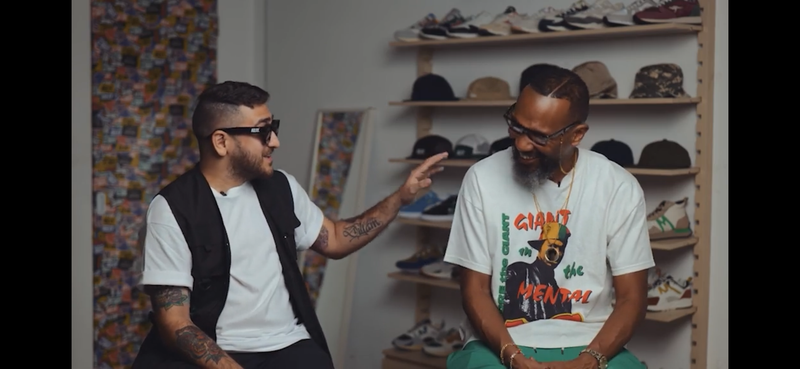
Twenty years in, and the story still hits. Patta co-founder Edson Sabajo joined AGLXY for a conversation that goes past the brand and into the mindset behind it.Edson looks back on two decades of growing Patta, from a shop built on a love for sneakers and hip-hop into a global family. He also takes us behind the scenes of the documentary and how they worked on it together.From there, the conversation turns to the ideas that shaped what Patta is today. Edson explains how years of brainstorming, trying things out and testing ideas led to the Patta Academy and the Patta family as we know it now.At the heart of it is a simple message for the next generation: take what we built and do better than us.Tap in on Spotify or watch the full interview below.